Want to learn about Product Marketing Managers (PMMs)? This guide defines the PMM role, contrasts it with product management, and explores nine core responsibilities through Confluence example pages.
Despite its relatively recent formalisation and occasional confusion with
product management, the Product Marketing Manager (PMM) role has proven to be increasingly valuable in the ever-changing world of software development. This is shown in
research by McKinsey, which found that companies with established PMM functions saw higher revenue growth over three years than their peers.
Here, we’ll explain what a PMM does, how the role differs from that of a product manager (PM), and explore nine key responsibilities with deliverables demonstrated in Confluence example pages.
What is a Product Marketing Manager (PMM)?
A PMM is the bridge between product teams and marketing teams, with expertise in both the product itself and the best way to get it out there. They are responsible for understanding target customers and competitors, positioning the product, creating its messaging, and planning how to launch, promote, and grow it in the market. With a finger in each pie, they can sit comfortably in either team and are invaluable to both.
Product Marketing Managers vs Product Managers: Key differences
On top of the similar names, there’s some crossover in the roles of Product Marketing Managers (PMMs) and Product Managers (PMs), and the two should collaborate closely, but they are distinct roles. To put it simply, a PM defines what the product will be, and a PMM ensures it reaches customers. A PM is occupied with product strategy, roadmapping, and delivery, while a PMM focuses on market research, messaging, launches, sales enablement, and adoption for a specific product.
Nine PMM responsibilities with Confluence example pages
Let’s explore some of the key duties of Product Marketing Managers with the help of some example pages built on Confluence for your inspiration.
1. Creating the go-to-market plan
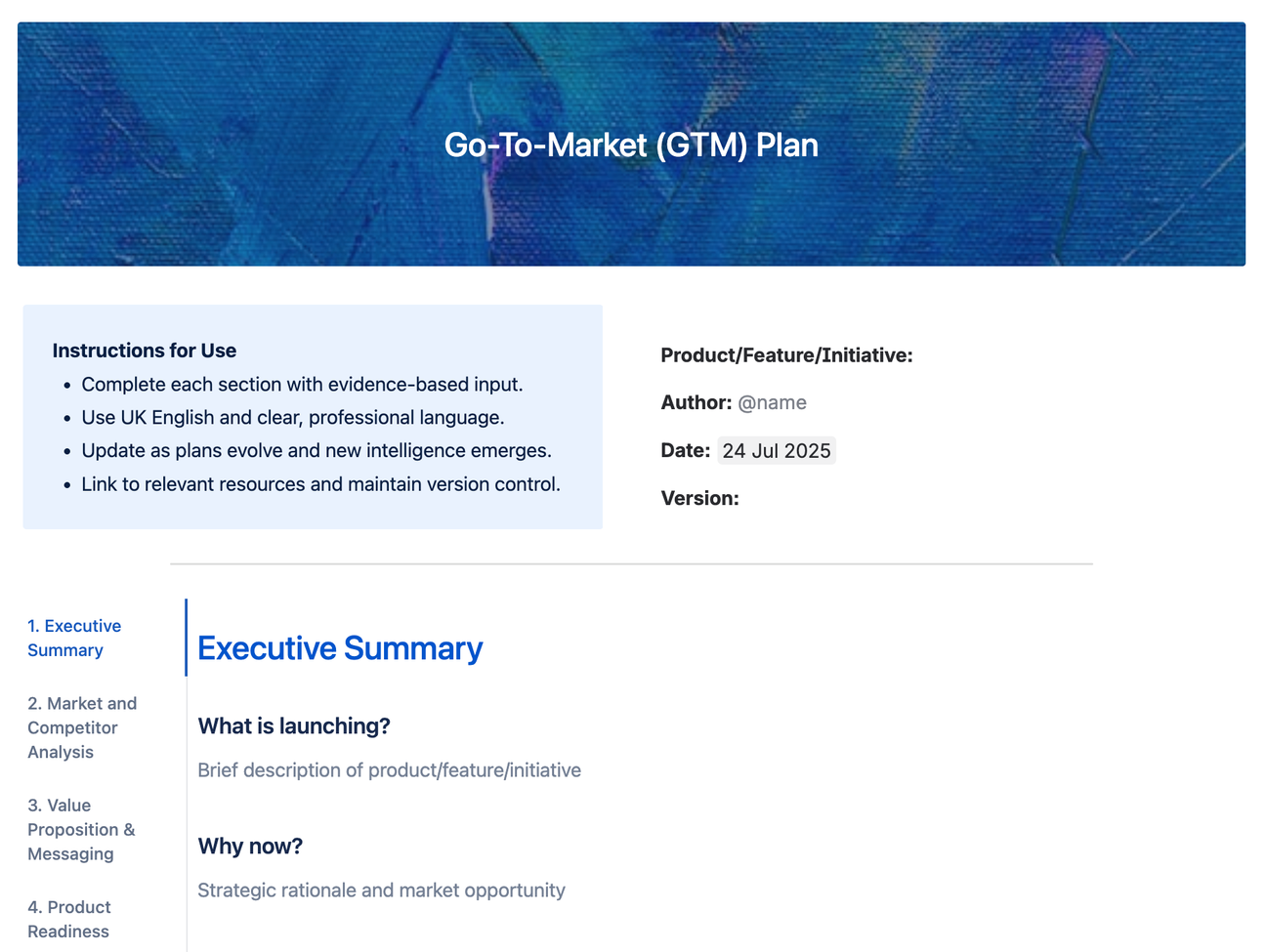
PMMs are responsible for developing plans to bring a product to a target market. Known as a go-to-market (GTM) plan, it can cover everything from market analysis, product readiness, and launch plans to success metrics and post-launch improvements, offering a broad view of the product’s entry into the market.
Learn more about GTM plans or explore our example GTM plan in Confluence:
2. Setting the messaging framework
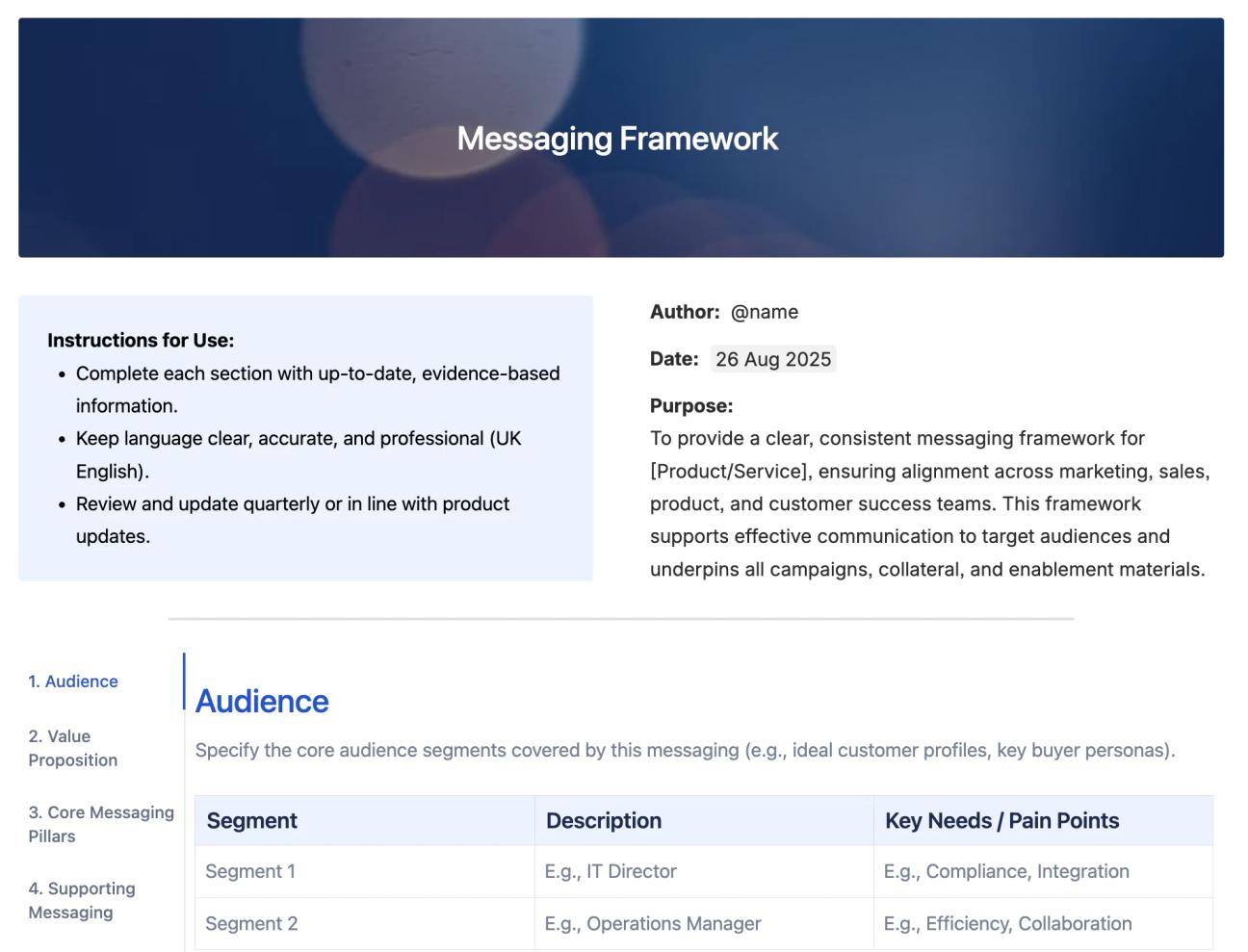
PMMs are also expected to set and maintain the messaging framework: a set of core messages, proof points, and supporting language that will guide the entire team on communicating about the product. This ensures consistency and means no one’s at a loss for how to discuss the product’s value, no matter the channel or audience they’re facing.
Learn more about messaging frameworks or explore our example in Confluence:
3. Composing one-pagers
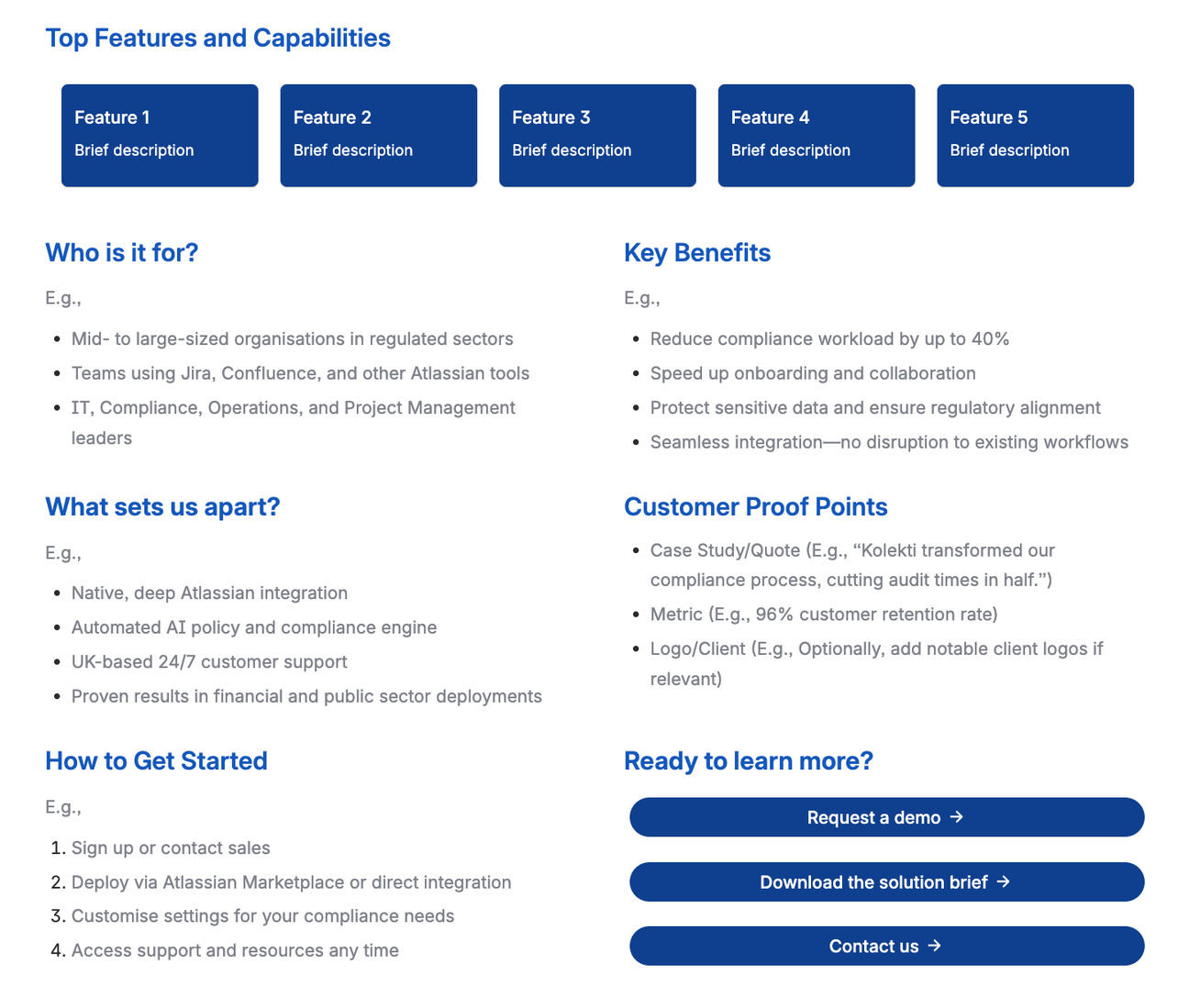
One-pagers explain the product in the most concise way possible, on a single page (hence the name). The PMM creates the content for the one-pager, including information such as the benefits, differentiators, and solutions the product offers, and adapts each one for specific audiences. They then equip the sales and marketing teams to use it.
Learn more about one-pagers or explore our example one-pager in Confluence:
4. Defining the ideal customer profile
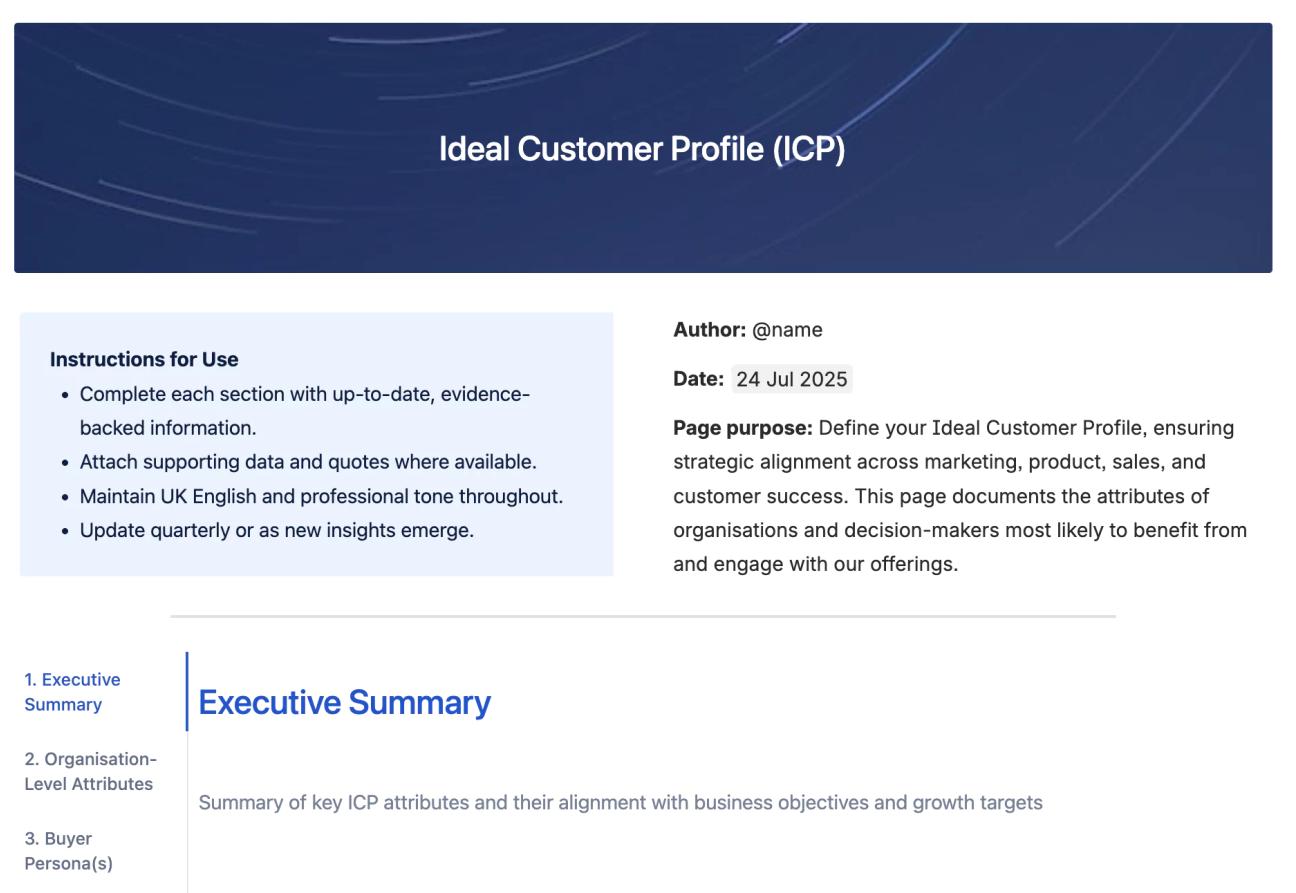
PMMs are in charge of researching and defining the ideal customer profile (ICP), which describes the type of organisation likely to gain the most value from (and successfully buy) the product, based on attributes like industry, size, needs, and more. This helps the team focus resources on the best-fit opportunities.
Learn more about ICPs or explore our example ICP in Confluence:
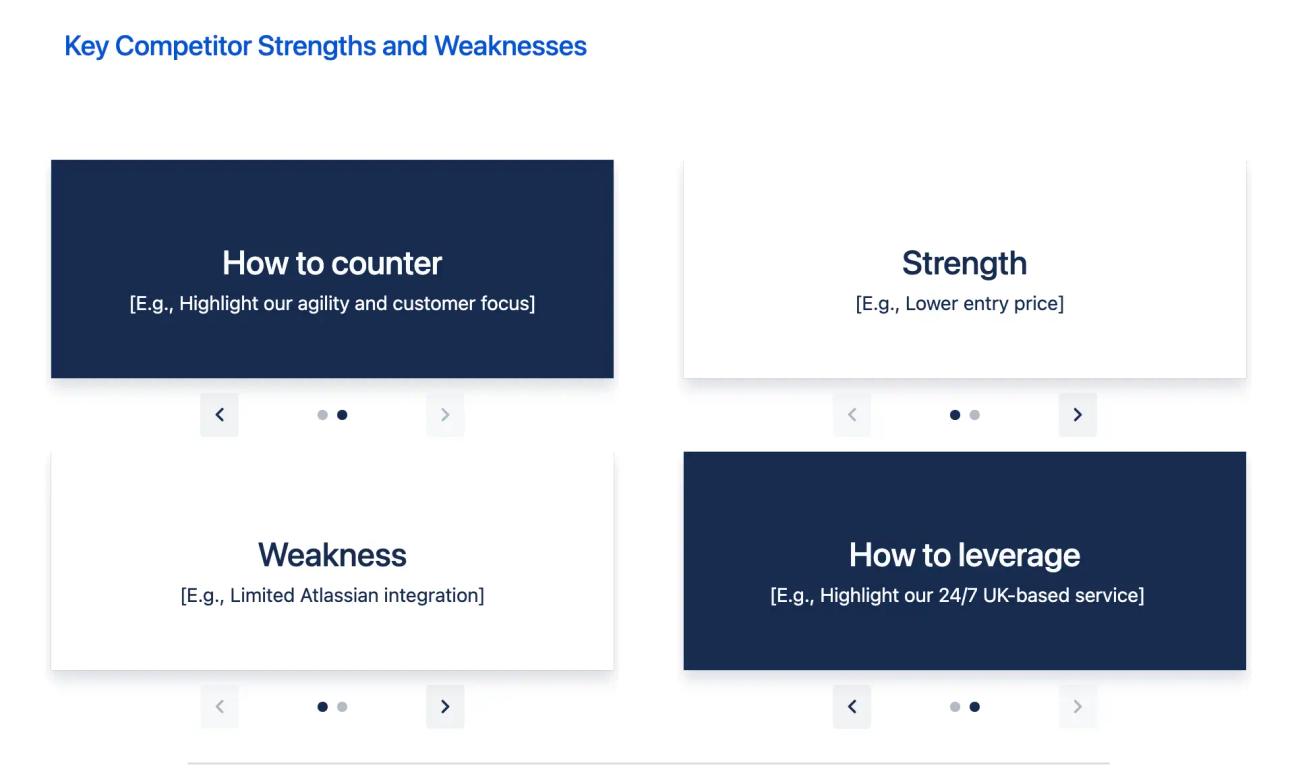
5. Creating battle cards for the sales team
Containing everything from competitor comparisons to objection responses, battle cards are a sales team’s favourite weapon, allowing them to find answers and selling points quickly on the spot. PMMs are responsible for creating and maintaining these powerful resources so that the sales team can wield them with the assurance that everything on the card comes directly from the source.
Learn more about battle cards or explore our example battle card in Confluence:
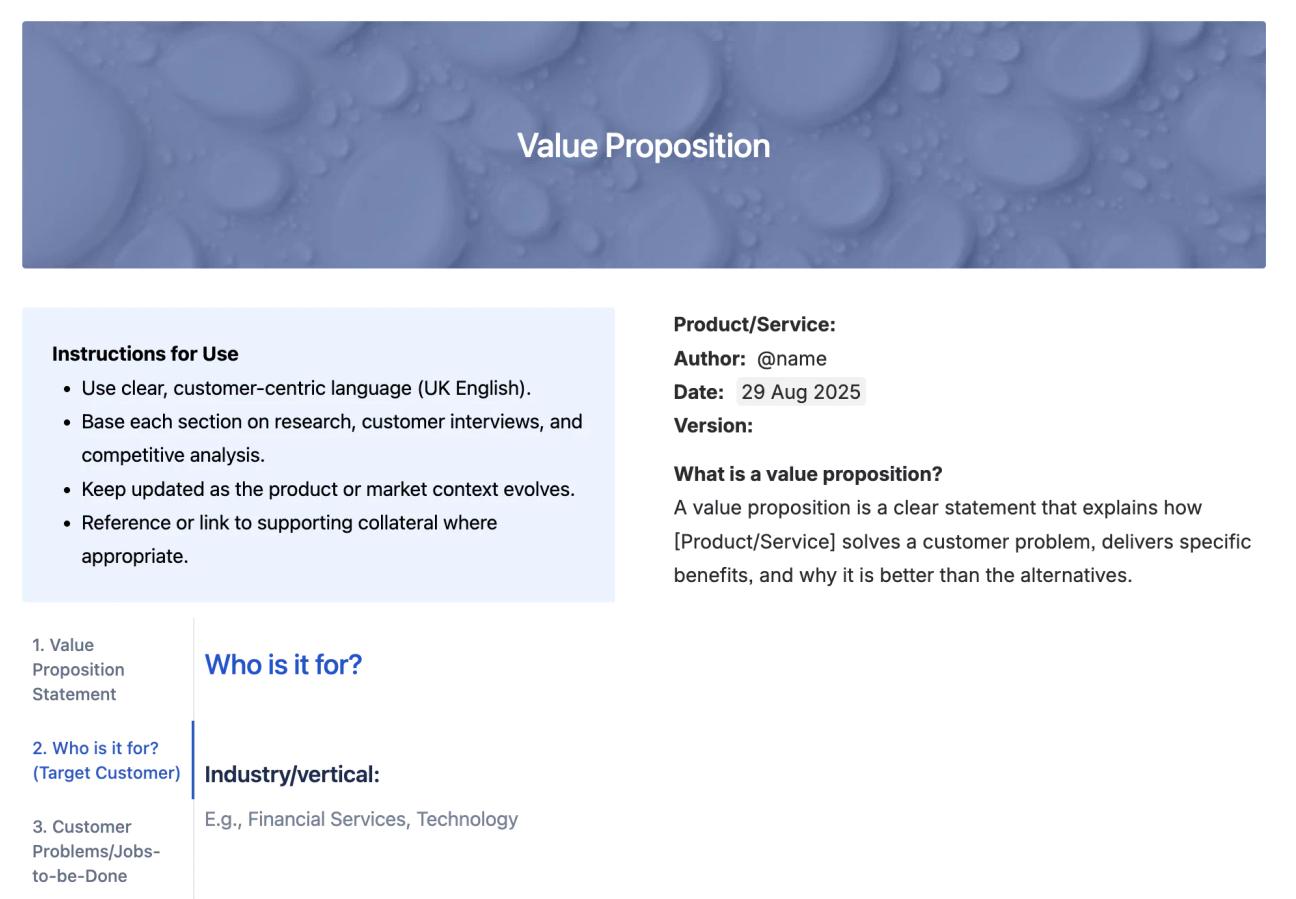
6. Developing the value proposition statement
The value proposition statement is a clear declaration of the outcome the product delivers to customers, laying out who it’s for and why it’s preferable to alternatives. The PMM develops and tests the statement using customer research, competitive insight, and other evidence to discover and support the claims.
Learn more about value proposition statements or explore our example in Confluence:
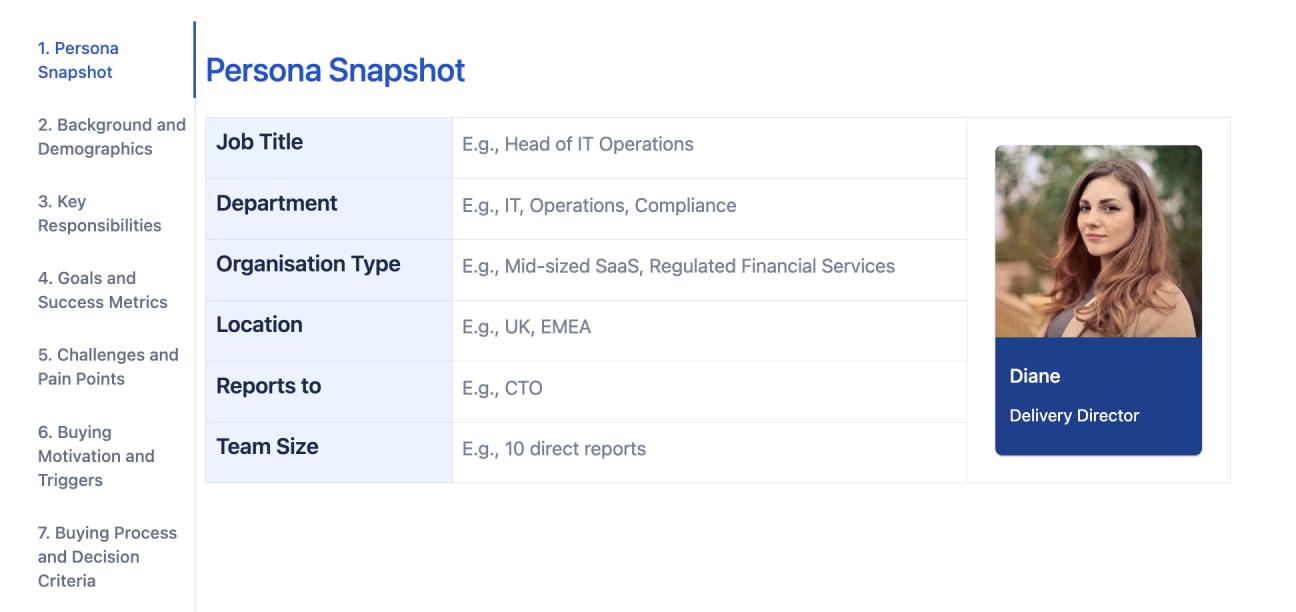
7. Defining buyer personas
The PMM identifies relevant personas, researches their needs and buying behaviours, and creates detailed profiles of research-based but fictional people who would make potential customers for the product. This allows the team to have someone specific in mind, enabling more relevant communication and a smoother buying journey.
Learn more about buyer personas or explore our example buyer persona in Confluence:
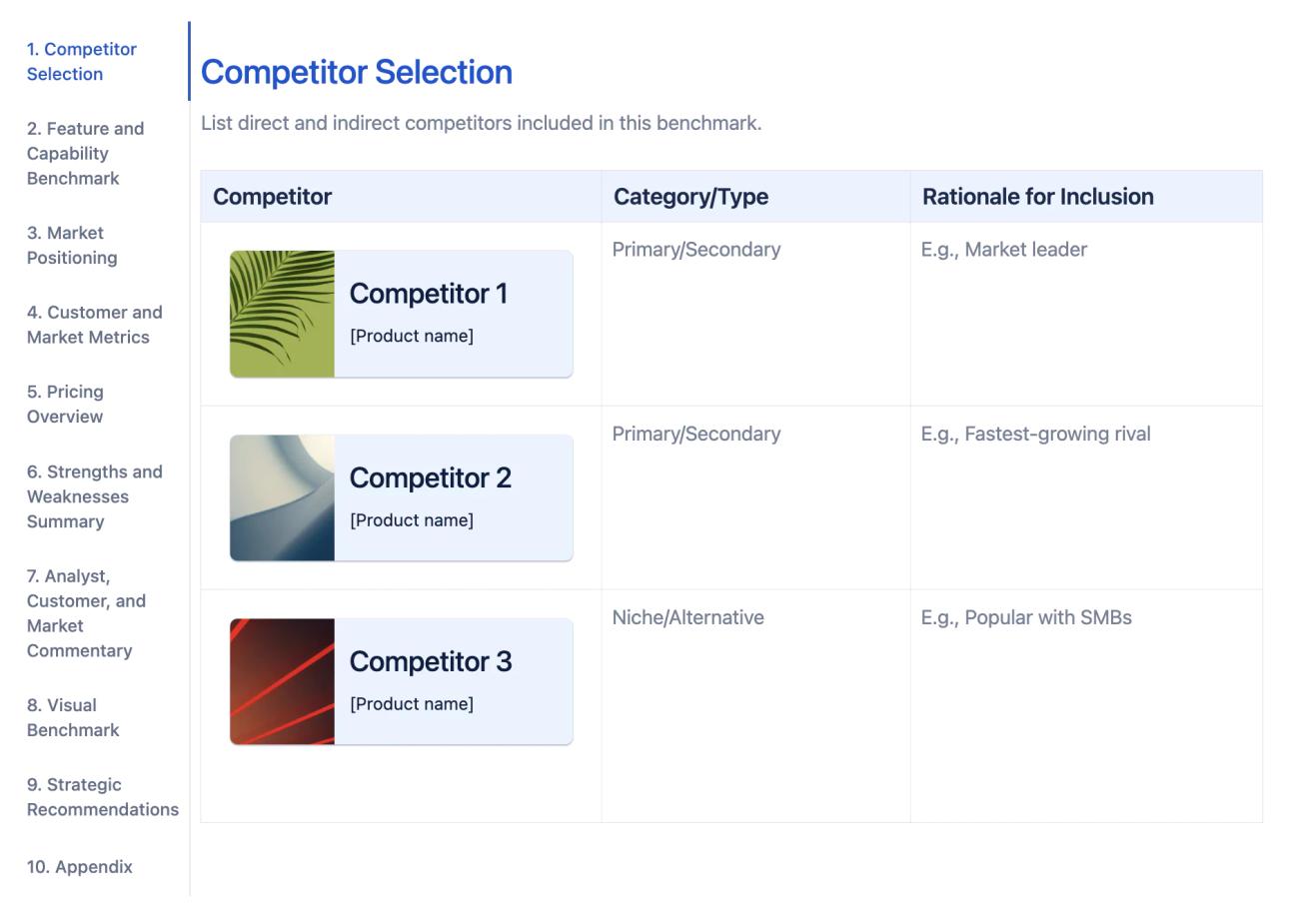
8. Competitor benchmarking
PMMs are also responsible for gathering and interpreting competitive intelligence, identifying meaningful gaps and differentiators, and sharing their findings (a process known as competitor benchmarking). This helps reveal opportunities in the market and ensures the company is competing effectively.
Learn more about competitor benchmarking or explore our example in Confluence:
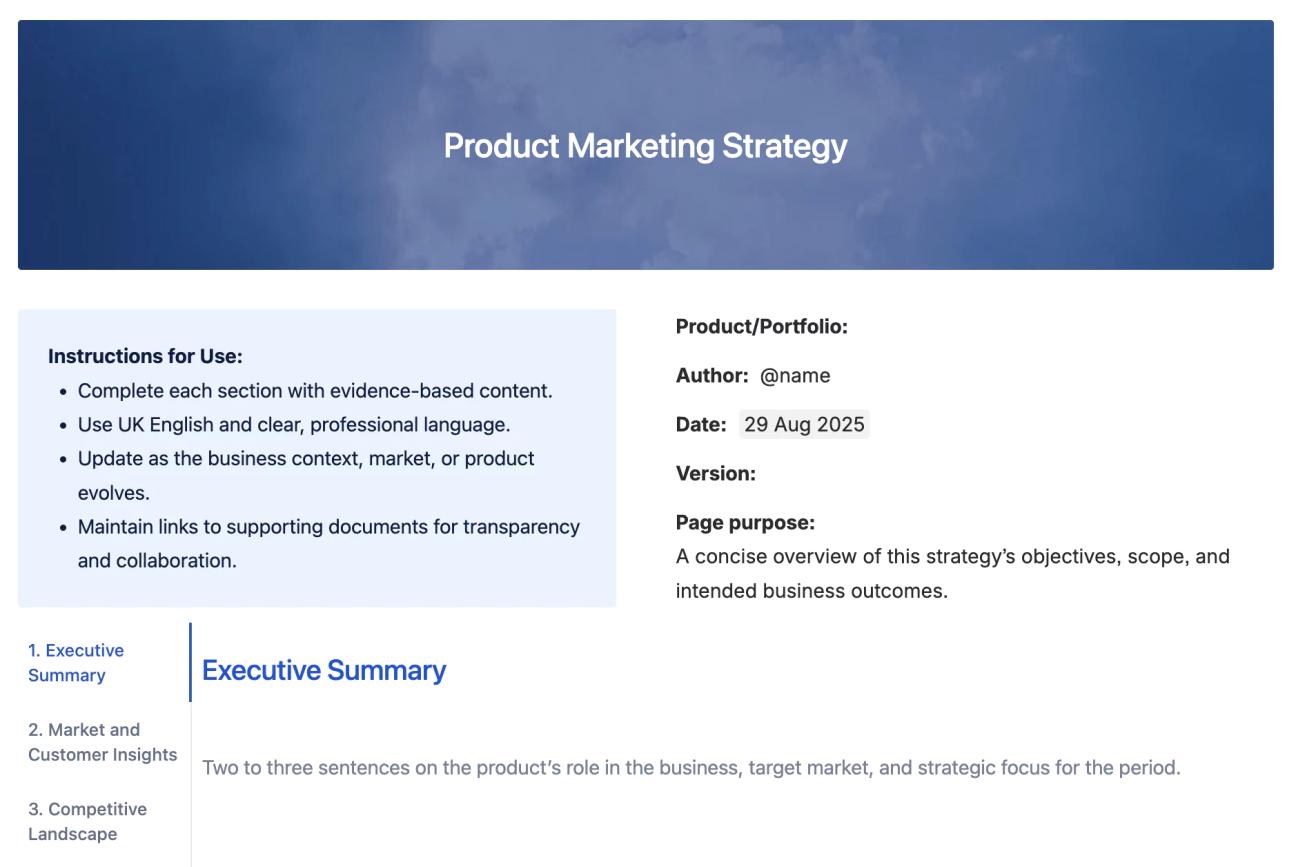
9. Developing the product marketing strategy
Last (but certainly not least) on our list, the PMM leads the product marketing strategy: the overarching plan for understanding the market, positioning the product, and reaching the right customers. They do this by connecting ICPs, buyer personas, messaging, and more to see the full picture in all its detail.
Learn more about product marketing strategies or explore our example in Confluence:
Why use Confluence for product marketing?
Confluence acts as a centralised, searchable “
single source of truth” for strategy, messaging, campaign plans, and launch documentation, while integrating tightly with Jira and other Atlassian tools. This means PMMs can link strategy pages to epics and issues, trace GTM work back to product requirements, and get real-time status updates, all without switching tools. When everything’s maintained and updated in one place, teams always know where to find the latest version and why decisions were made.
Your Confluence pages, but better
Give your Confluence pages the love they deserve. Discover Mosaic today and start building pages that users care about.