A lot has happened in the 25 years since agile methodology entered the world of software development, but the key points remain as relevant today as ever.
Whether you've never heard of agile methodology or the Agile Manifesto, or you’ve heard so much about it that the noise has somewhat drowned the real meaning, here are the answers you're looking for. In this blog, we'll take it back to basics, focusing on what it is, where it began, and how your team can become agile.
What is agile?
Agile is a methodology originally designed with software development teams in mind, but it can be adapted for teams across all sorts of fields, including HR, marketing, and beyond. It was first outlined by its creators in the Agile Manifesto, written in 2001, as an alternative to the heavyweight, documentation-driven processes that set the standard at the time, offering a more adaptable, collaborative, and people-first approach without sacrificing productivity.
The agile backstory
In 2001, 17 people from across the field of software development and programming came together in Snowbird, Utah, to discuss their mutual frustration with the rigidity of standard development practises at the time. Traditional methods had placed too much importance on lengthy documentation and endless planning, and too little importance on the main goal: pleasing the customer.
Over the course of a single weekend in the mountains, the Snowbird 17 identified four pillars and 12 supporting principles that they all agreed would change software development for the better. These would become the
Agile Manifesto.
The Agile Manifesto
The following four pillars and 12 key principles shape the agile methodology:
The four pillars of agile
These four pillars represent the core values of the agile methodology:
- Individuals and interactions over processes and tools.
- Working software over comprehensive documentation.
- Customer collaboration over contract negotiation.
- Responding to change over following a plan.
While the items on the right still have value, those on the left take precedence, encouraging better flexibility, more frequent and useful feedback, and more consistent outcomes.
The 12 principles of agile
To build on those values and turn them into practical ways of working, the authors of the Agile Manifesto established 12 principles. They are:
- Satisfy the customer through early and continuous delivery of valuable software.
- Welcome changing requirements, even late in development, and harness change for the customer's competitive advantage.
- Deliver working software frequently, from a couple of weeks to a couple of months, with a preference for the shorter timescale.
- Business people and developers must work together daily throughout the project.
- Build projects around motivated individuals, giving them the environment and support they need and trusting them to get the job done.
- The most efficient and effective way to convey information within and to a development team is with face-to-face conversation.
- Working software is the primary measure of progress.
- Agile processes promote sustainable development. The sponsors, developers, and users should be able to maintain a constant pace indefinitely.
- Continuous attention to technical excellence and good design enhances agility.
- Simplicity (the art of maximising the amount of work not done) is essential.
- The best architectures, requirements, and designs emerge from self-organising teams.
- At regular intervals, the team reflects on how to become more effective, then tunes and adjusts its behaviour accordingly.
How to do agile successfully
In the 25 years since the Agile Manifesto was released, there’s been a lot of noise about the methodology, and plenty of people have had their own interpretations of it, even developing frameworks within the agile methodology, like scrum (if you think "sprints" when you hear "agile," you're probably most familiar with the
scrum framework, but it isn't the only way to be agile).
Whether you prefer
kanban or scrum (or neither!), being agile simply depends on finding the best way to work with your team while following the key principles, such as welcoming change, getting regular feedback, and prioritising collaboration over processes and tools.
Get started with agile templates
Like the sound of agile, but not sure where to start? You're in luck, because it's now easier than ever to hone your team's agility.
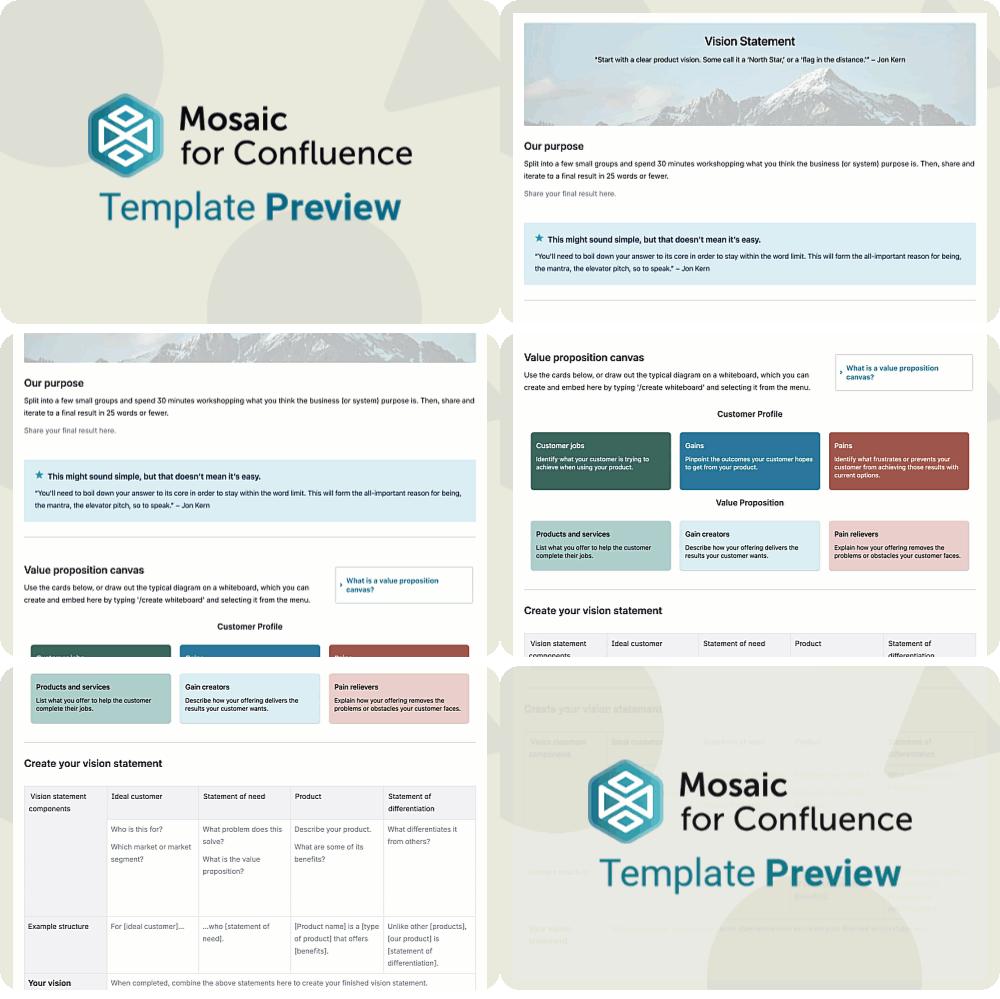
To celebrate the 25th anniversary of the Agile Manifesto, Jon Kern (one of the 17 authors), has teamed up with Kolekti to release a framework of 10 templates available with Mosaic for Confluence. These templates will take your team through several key agile practises, such as writing a vision statement, understanding your users' journeys, and documenting feedback in a way that actually leads to action – all with expert guidance and tips from Jon Kern himself.
Unlock the full potential of the agile methodology
Check out the Jon Kern Agile Framework and try all the templates with a 30-day free trial of Mosaic for Confluence.