Kolekti home
How to run effective agile sprints (and when to drop them)
Share on socials

How to run effective agile sprints (and when to drop them)

A headshot of Matilda French
Matilda French
Published: 15 May 2026
8 min read
Colourful, stylised image of a cheetah running
A headshot of Matilda French
Matilda French
Published: 15 May 2026
8 min read
Jump to section
What are sprints?
Who do sprints usually work best for?
How to have successful sprints
Pitfalls to avoid in sprints
Know when sprints aren't working for you
Alternatives to sprints under the agile methodology
The importance of retrospectives
Summary

Wondering if agile sprints are right for your team and, if so, how to get the most out of them? Here are the answers, backed up by expert Jon Kern.

Sprints can be a useful way to structure work and encourage a focused mindset, but they are not suited to every team. When sprints aren't working as they should, they can become more of a drag than a helping hand.

Here's how to get the most out of sprints and what you can do if they aren't working for you, with expert advice and opinions from Jon Kern, co-author of the Agile Manifesto.

What are sprints?

Sprints are a key part of Scrum, one of the more popular frameworks within the agile methodology. A sprint can be any length of time (often two weeks), and the idea is that your team will carry a set of selected tasks from the backlog to completion within that window, often to achieve a specific outcome. This can help maintain focus on specific tasks and avoid distraction or overwhelm from too much work happening all at once – a noble goal.

Who do sprints usually work best for?

“To teams who are newly formed, creating a new product, and are just getting started, sprints can often be helpful.” – Jon Kern

Sprints can work well for new teams or teams with new products or challenges to address, as they help everyone get on the same page and work towards a single goal. Sprints also limit the amount of visible work and protect the team from interruption. Without them, the amount to get done can be overwhelming, and priorities can get confused.

If you find that lots of tasks are being taken on at once but not a lot is getting finished within a reasonable time, or your team is divided over priorities and timeframes, sprints might be just what you need to create a calm, focused mindset that will get stuff done.

How to have successful sprints

Preparation and reflection are the bookends of every successful sprint.

Make sure your sprints serve their purpose by setting a primary goal at the start of each sprint. This will guide your team on which tasks to prioritise and help them understand the importance of what they're working on and how it contributes to the bigger picture.

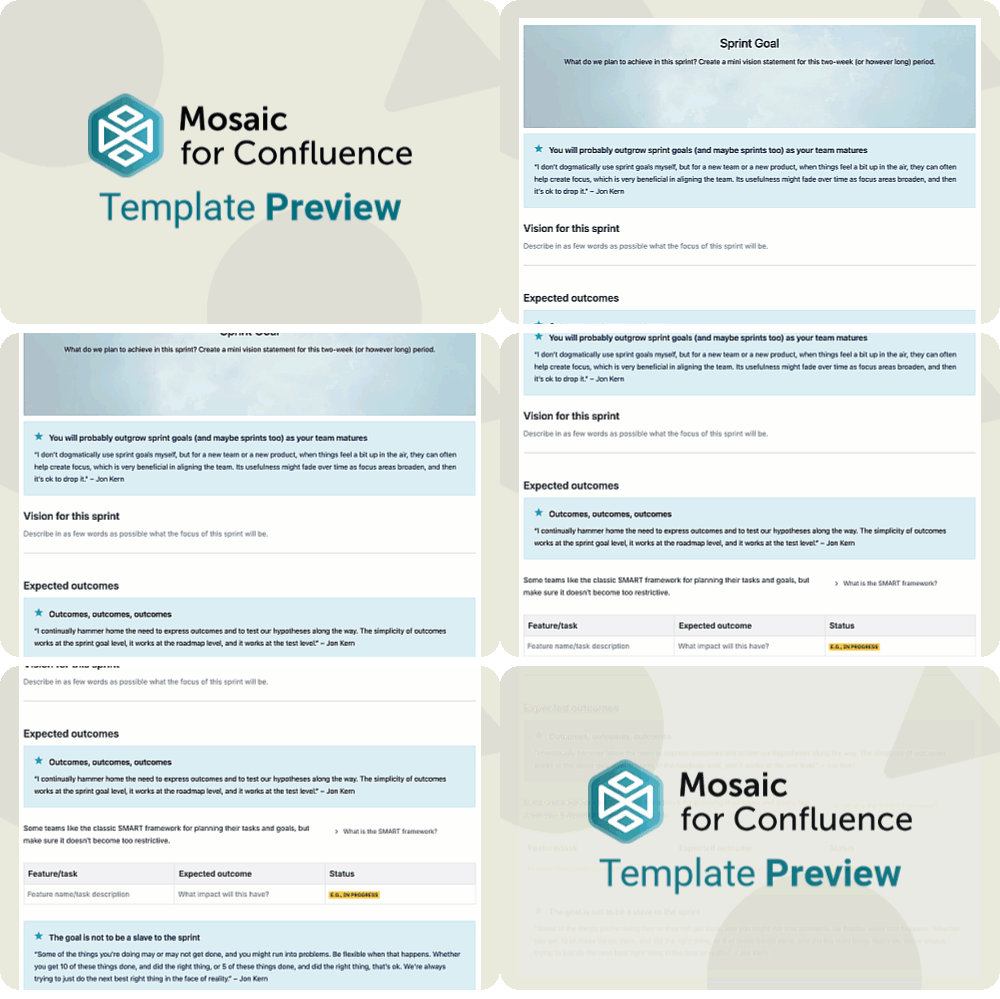
Luckily, we have just the template for this. Our Agile Sprint Goal Template is the sixth template of the Jon Kern Agile Framework, a set of 10 templates shaped by Kern himself and filled with his expert advice to help teams unlock the full potential of the agile methodology.

At the end of every sprint, reflect on what went well and what didn’t. Sprint reviews are great for examining what was achieved in a sprint, while retrospectives focus on how the work was done. Keep reading or skip ahead to learn more about the importance of retrospectives (whether or not you do sprints).

Pitfalls to avoid in sprints

Even with the best intentions, agile teams can sometimes slip into bad sprint habits that slow them down or make them less adaptable. Here are a few common pitfalls to watch out for:

Batch processing delays

“If one issue is complete, and it's tested, and it works, why can't we just deploy that? Why do we have to wait for 9 non-related things to be shipped?” – Jon Kern
Holding on to completed work until a larger release is ready often defeats the purpose of agility. In contrast, smaller, more frequent releases help teams close the gap between development and customer feedback, improving productivity and sustaining the momentum.

Lost flexibility

“Being agile is about adjusting to new information. An incident just occurred? Okay, well, that's gonna take precedence.” – Jon Kern
Agility means responding to change, not resisting it. When the unexpected happens, whether it’s an incident, a shift in priority, or new information, teams need the trust and autonomy to pivot. Sprints should not stop your team from working on the most important thing at a given time.

Becoming a slave to the sprint

“Some of the things you're doing may or may not get done, and you might run into problems. [...] When people with an expert mindset see something like this, suddenly, they've got a hammer to hit the team with.” – Jon Kern
Sometimes, sprint goals and deadlines can create a kind of pressure that drives fear and box‑ticking behaviour, instead of fostering collaboration and problem‑solving. When sprints become a weapon rather than an aid, it is time to reconsider.


Know when sprints aren't working for you

“This is my love-hate with sprints: It's an extra step. It's extra organisation.” – Jon Kern

You might find that no matter how much you prepare and reflect on each sprint, they just aren't working for you. The truth is, sprints don't work for all teams, and as teams mature, they can outgrow them.

The important thing is to pay attention if sprints aren't serving your team any more and try something new, whether it's revitalising them with a new format, trying a different amount of time, or leaving them behind altogether and finding a new way to manage work. Accepting change is crucial to being agile.

“As a team matures, you might want to consider: Do we still want to do these sprints? Or do we want to move to Kanban or some hybrid version thereof?” – Jon Kern

Alternatives to sprints under the agile methodology

While sprints are a key part of the Scrum framework, it is just as possible to be agile without them. Often, when teams outgrow sprints, they move on to Kanban, another framework within the agile methodology.

Where sprints encourage specified tasks to be completed within a set amount of time in a stop-start way, Kanban encourages a consistent flow of work.

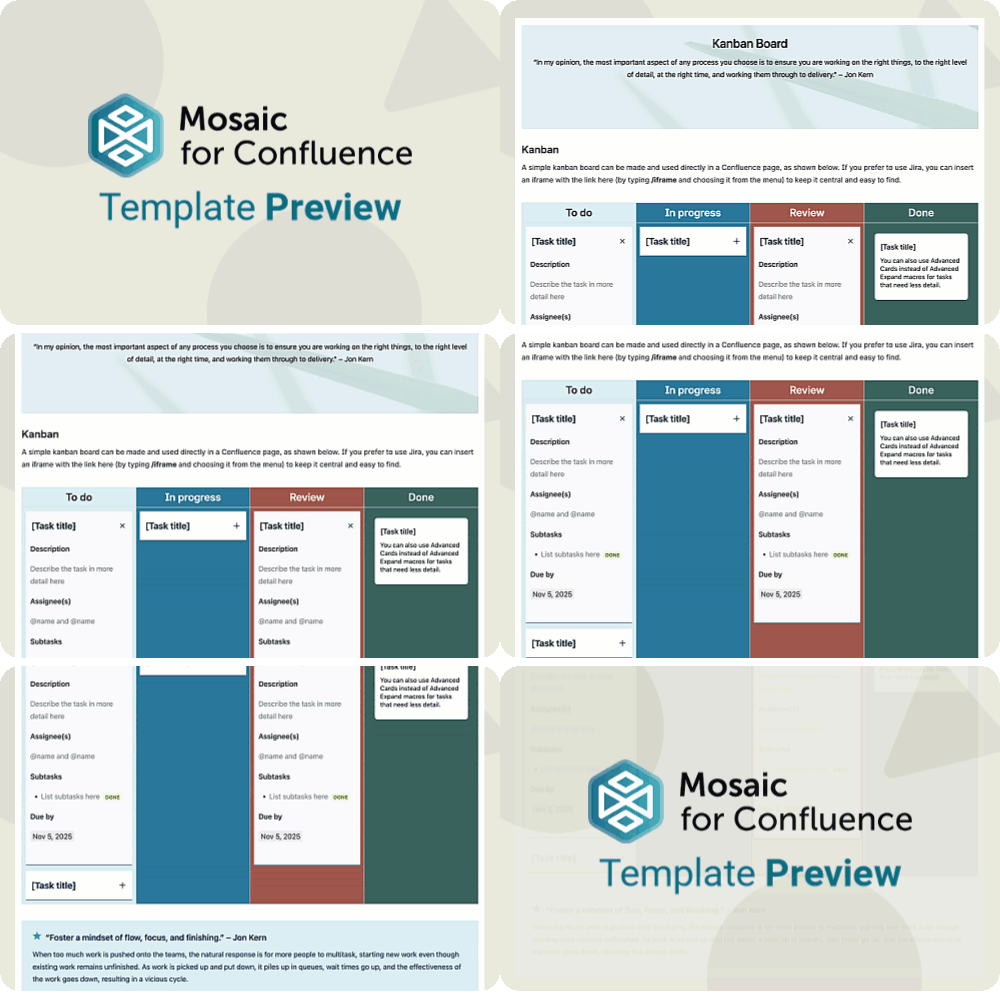
With Kanban, tasks are tracked on a board divided into columns such as ‘To do’, ‘In progress’, ‘Review’, and ‘Done’. Rather than waiting for a new sprint, tasks can be added to the board as needed based on priority, urgency, and your team’s capacity.

If Kanban sounds like a better fit for your team, we have good news. Our Agile Kanban Board Template (with tips and advice from Jon Kern) is ready for use in Confluence as a simple, easy way to get started, with the option to add more complex tools like Jira later.

The importance of retrospectives (regardless of sprints)

Contrary to what some people might believe, retrospectives are not exclusive to sprints and are an important ritual for any agile team. Whichever method you choose to manage your team's workload and organise tasks, keep doing regular retrospectives.

“Retrospectives are feedback through individuals and interactions. If you adopt only one agile practice, let it be regular feedback.” – Jon Kern

Retrospectives are a space for your team to reflect on and improve how they work: the processes they use, their communication methods, and everything in between. Without regular feedback like this, agile teams struggle to maintain momentum and consistent progress, eventually losing touch with their agility altogether.

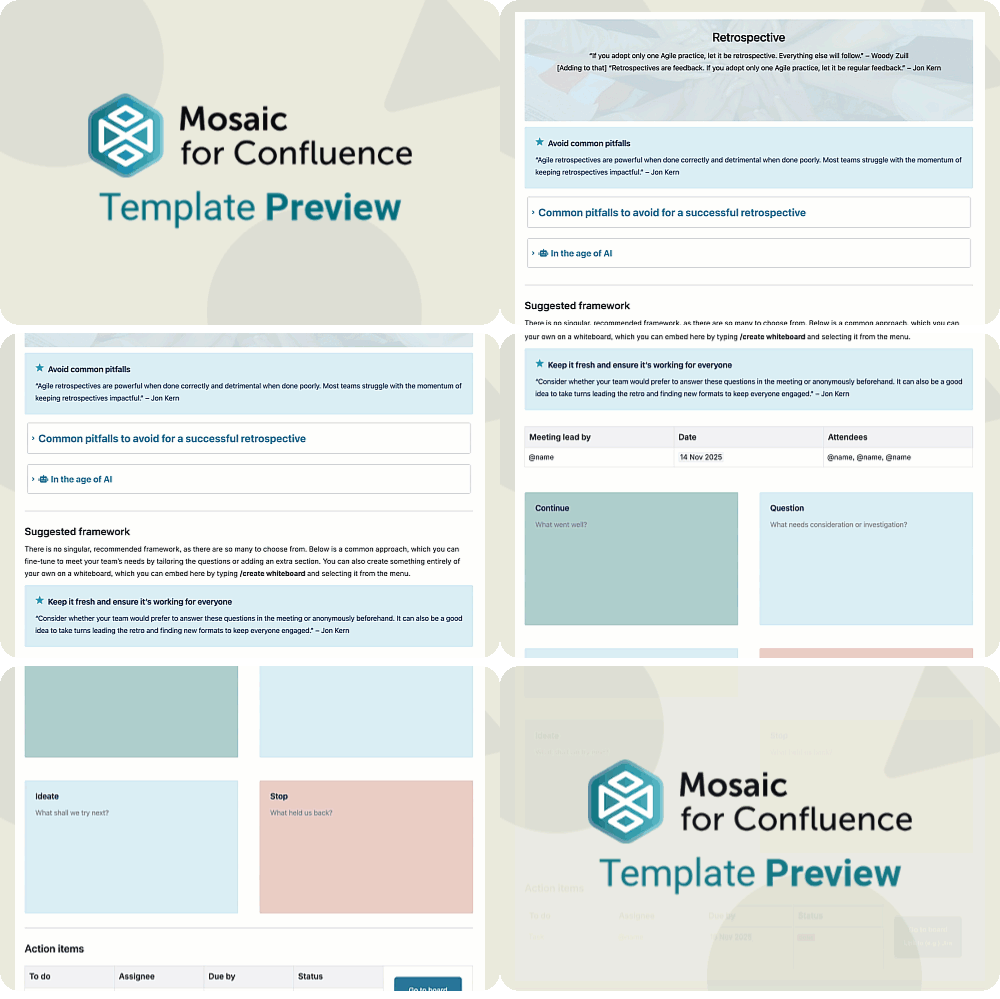
To ensure you're getting the most out of your retrospectives and avoiding common pitfalls, get your hands on our Agile Retrospective Template with (you guessed it) tips and tricks from Jon Kern.

Summary

“I don’t use sprint goals myself, but for a new team or a new product, when things feel a bit up in the air, they can often be helpful to create focus. Its usefulness might fade over time as focus areas broaden, and then it’s ok to drop it.” – Jon Kern
Sprints aren't for everyone, but regardless of which task-tracking framework works best for your team, stay agile by holding onto the core principles and values of the Agile Manifesto, like regular feedback, openness to change, and collaboration over processes and tools.

Unlock the full potential of the agile methodology

Check out the Jon Kern Agile Framework and try all the templates with a 30-day free trial of Mosaic for Confluence.
Written by
A headshot of Matilda French
Matilda French
Associate Content Marketing Manager
Matilda has a BA Hons degree in Creative Writing and Film and Screen Studies and is using her love of storytelling to create informative content that helps workers get the most out of their digital tools.