
Two ways to create a collapsible section in Confluence
Share on socials
Two ways to create a collapsible section in Confluence Cloud | 1-minute demo


Jump to Section
Jump to section
What are collapsible sections?
How to create a collapsible section
1: Expand macro
- What it is
- How to use it
- Benefits & drawbacks
2: Advanced Expand macro
- What it is
- How to use it
- Features
Use cases
Give Confluence users the essential information they need without overwhelming them. It’s easy with the help of collapsible sections!
Your Confluence pages often hold useful guidance, but too much visible content can make readers work harder than they need to. Collapsible sections help you keep pages tidy, scannable, and easy to use.
There are two clear ways to create collapsible sections in Confluence: the built-in Expand macro for simple content, and the Advanced Expand macro from Mosaic for Confluence when you need stronger styling, richer layouts, and more flexible nesting.
Quick answer: how do you add a collapsible section in Confluence?
To add a collapsible section, type /expand on a Confluence page, choose the Expand macro, add a clear title, then place your content in the body.
For richer styling or complex nested expands, install Mosaic for Confluence, type /expand on a Confluence page, then choose the Advanced Expand macro and follow the editor instructions.
For richer styling or complex nested expands, install Mosaic for Confluence, type /expand on a Confluence page, then choose the Advanced Expand macro and follow the editor instructions.
What are collapsible sections?
Collapsible sections, also known as expands, are interactive elements that users can click on to reveal (or hide) information. They’re an excellent way of saving space on a Confluence page, keeping it tidy and easy to scan.

How to create a collapsible section in Confluence
Use the standard Confluence Expand macro when you need a quick, simple section. Use Advanced Expand from Mosaic for Confluence when you need branded headers, richer formatting, or complex nested content.
Method 1: Confluence’s built-in Expand macro
Best for: Standard, functional collapsible sections where branding isn’t a priority, or there’s limited content.
To create a simple collapsible section, use Confluence’s built-in Expand macro. It’s free and ready to use, with no extra add-ons.
- On your page, type the shortcut /expand and select the Expand macro.
- Click the title placeholder to type a name for your section. You can use basic title formatting, such as bold and italics, but you can’t apply full heading styles or custom colours.
- Click the content area below the title to type or paste your information.
- Click Save to save your changes, then Publish or Update your page.
⚡️ Pro Tip: Need multiple collapsible sections? Select the Confluence Expand macro, then use the floating toolbar to copy or duplicate it before editing each title and body.
Benefits:
- Easy to use: It's quick and straightforward to add one to your page, meaning you can start organising your pages straight away.
- Comes with Confluence: Because it's a free, built-in feature, you don't need to worry about getting admin permission to install it.
- Basic title formatting: You can make title text clearer with simple formatting such as bold or italics.
Drawbacks:
- Easy to miss: The standard Expand macro header is small and plain, meaning users might skim past important information.
- Limited styling: You can’t change the header background colour, add icons, or customise the style to match your company brand. Title formatting is still limited compared with full headings.
- Limited nesting: The standard Expand macro can handle simple content, but it still struggles with complex macros and advanced layouts inside nested structures.
Looking for a more engaging alternative? Read on…
Method 2: Advanced Expand macro (from Mosaic)
Best for: Creating cleaner, eye-catching pages with custom styles and branded headers.
While Confluence’s built-in tool is functional, Mosaic’s Advanced Expand macro is designed to help you organise your page with style.
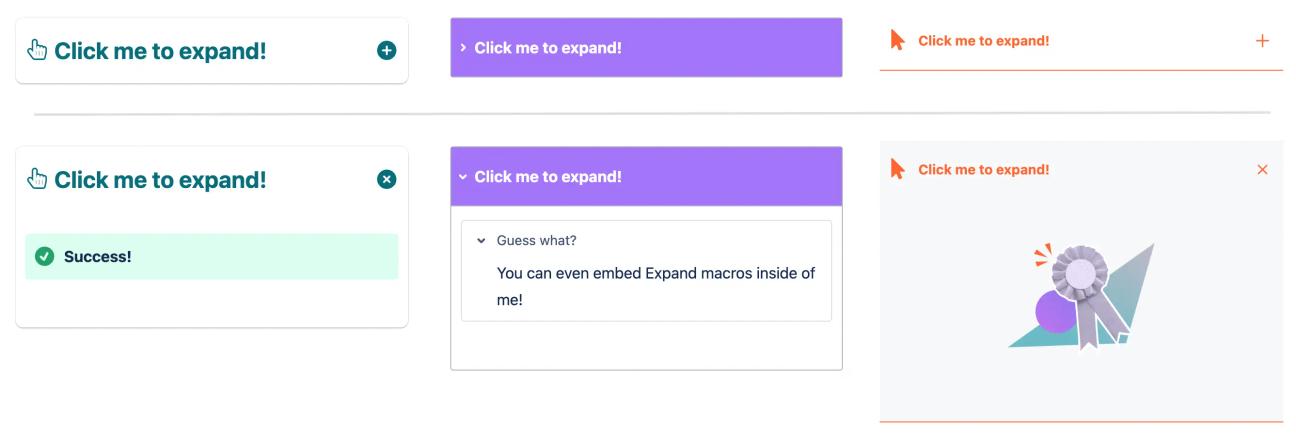
Just three different ways you can style the Advanced Expand macro
The Advanced Expand macro features a fully customisable header that makes your sections pop, meaning fewer users miss important information. You can also nest tables, images, Confluence macros, and more complex Marketplace app macros that the standard Confluence Expand macro still struggles with.
How to use Advanced Expand:
Keen to learn how to use the Advanced Expand macro on your Confluence pages? Here’s how to do it:
- Install Mosaic for Confluence from the Atlassian Marketplace
- In edit mode, start typing /advanced expand and click on the Advanced Expand macro.
- Type your header title and add any content to the body, including text, Confluence macros, images, and tables.
- Customise your collapsible section. You can:
- Choose from three header styles
- Change the header background and accent colours
- Add an icon to the header for visual context
- Customise the alignment, heading size, font size, and font style of the content inside your collapsible section.
- Press Save, then Publish or Update your page to see it in action.
⚡️ Pro tip: Advanced Expand macros are super flexible. You can nest them inside other structural macros from Mosaic, like Tabs or Backgrounds, to create rich, interactive layouts. That flexibility is useful when you need tables, images, or other structured content inside a collapsible section.
Features of Advanced Expand:
- Custom styles: Use any header colour so your sections aren’t missed.
- Flexible nesting: Nest Advanced Expand inside other macros (like Tabs or Backgrounds) for sophisticated layouts.
- Rich content: Use built-in Confluence macros within the collapsible section to make content more engaging and add more structure.
- Standout Headings: Change the size of your heading to really make it stand out on a page.
- Complex macro support: Build richer collapsible sections with complex macros and structured content that the standard Expand macro can find difficult to handle.
- Detailed formatting: Format content inside your collapsible section using alignment, font colour, heading size, and more options.
Get hands-on with the Advanced Expand macro and more!
Use cases for collapsible sections in Confluence
Collapsible sections are useful for breaking up long-form content and hiding information that might not be relevant to everyone. Here are three ways to use them on your Confluence pages:
FAQs
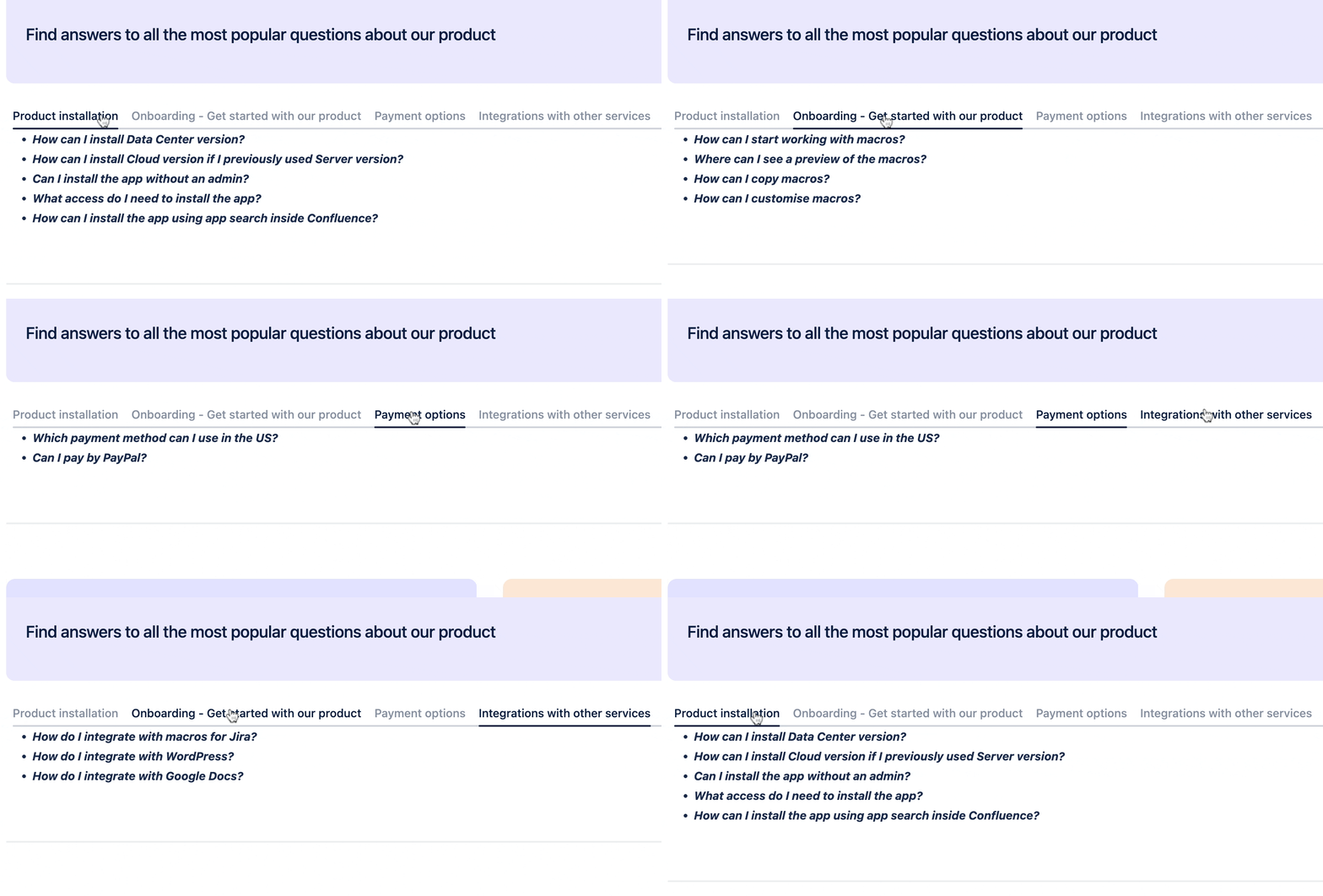
Nobody wants to read every single FAQ. Thankfully, collapsible sections keep all the irrelevant answers hidden away from users.
By combining Advanced Expand with Tabs (both included with Mosaic), they turn a wall of dull, hard-to-read text into neatly categorised FAQ that stay tucked away unless a user is genuinely interested.

You can embed the Advanced Expand macro inside other macros, like Tabs
Documentation
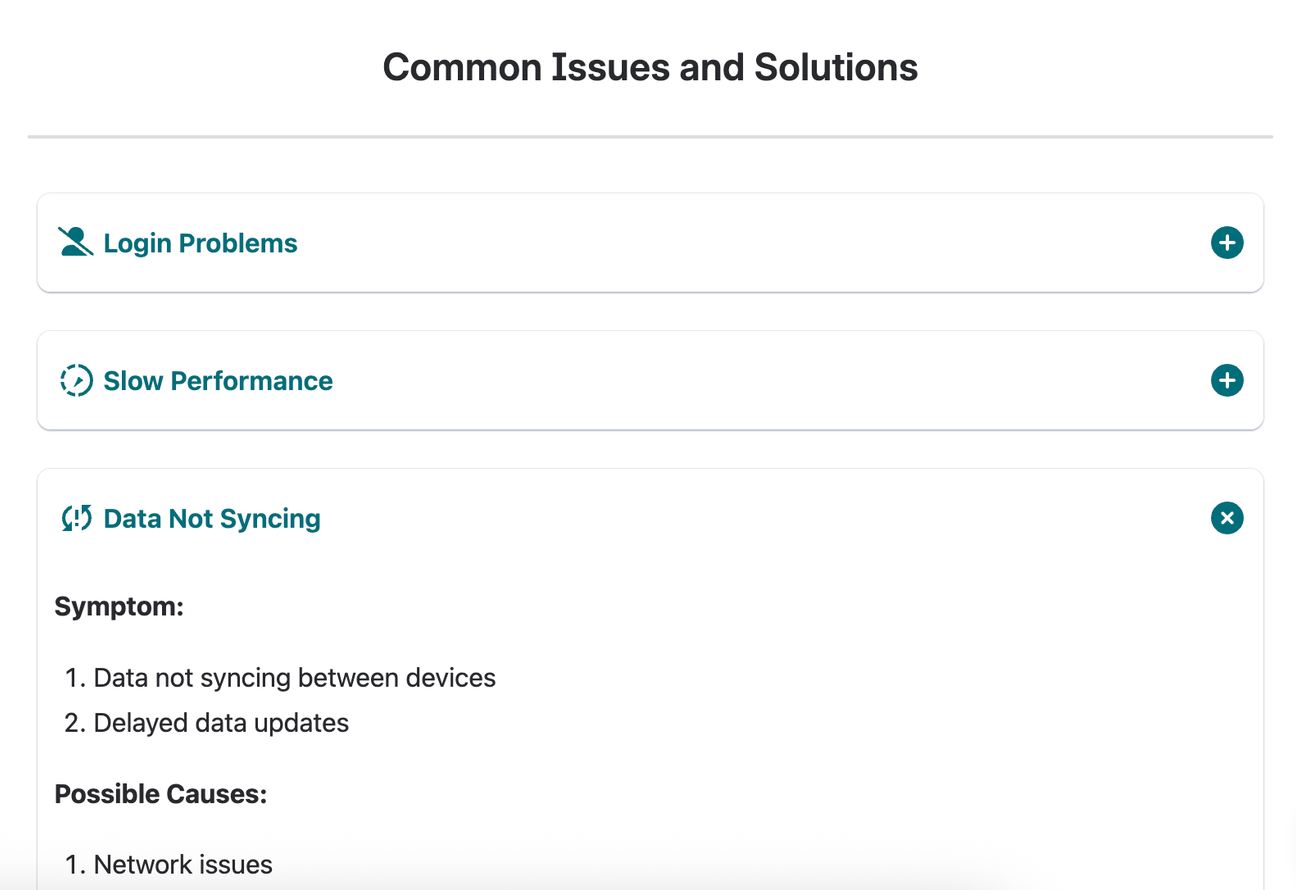
If your documentation contains additional context or information that isn't applicable to everyone, hiding it can help reduce page length and make it easier for others to read. For example, for software troubleshooting, you could use a separate expanding section for each issue type (see below for an example).
Task lists
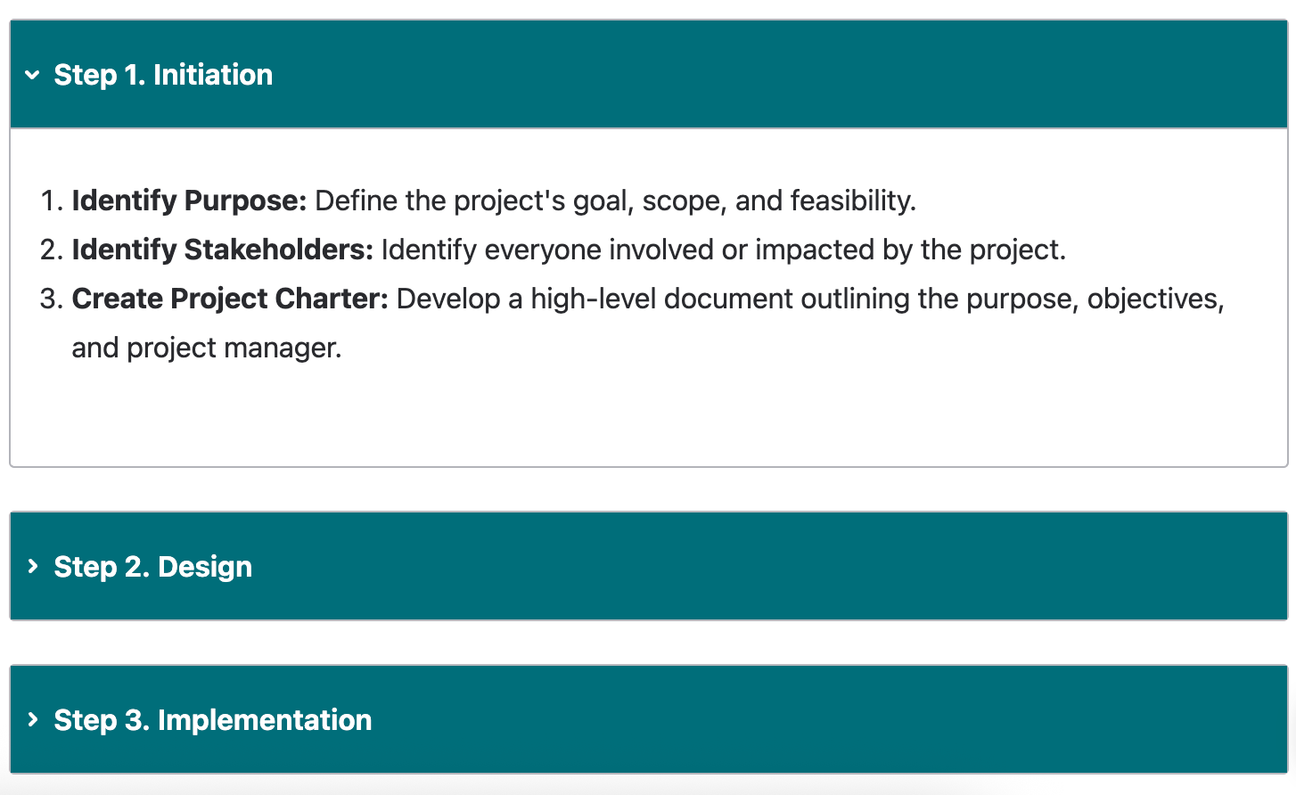
For bigger projects with many subtasks, breaking each list into a separate section can be useful. With collapsible sections, you can help team members focus on the step at hand, removing the rest of the noise.
When not to use a collapsible section in Confluence
Collapsible sections are great, but they aren't always the answer. If you have a very long page, asking users to click open dozens of sections can become tiresome.
For those situations, Mosaic offers a fantastic alternative: Tabs. Spreading information across several tabs keeps your page short while making it easy for users to find exactly what they need with a single click. Sound good? See our guide to creating Confluence tabs.
You now have two practical options: use the standard Expand macro for quick, simple collapsible sections, or choose Advanced Expand from Mosaic for Confluence when you need branded, flexible, and richer page experiences.

Unlock new ways to improve your user experience
Mosaic comes with Advanced Expand, Tabs, and many more macros to make pages easier to read and navigate.



Written by